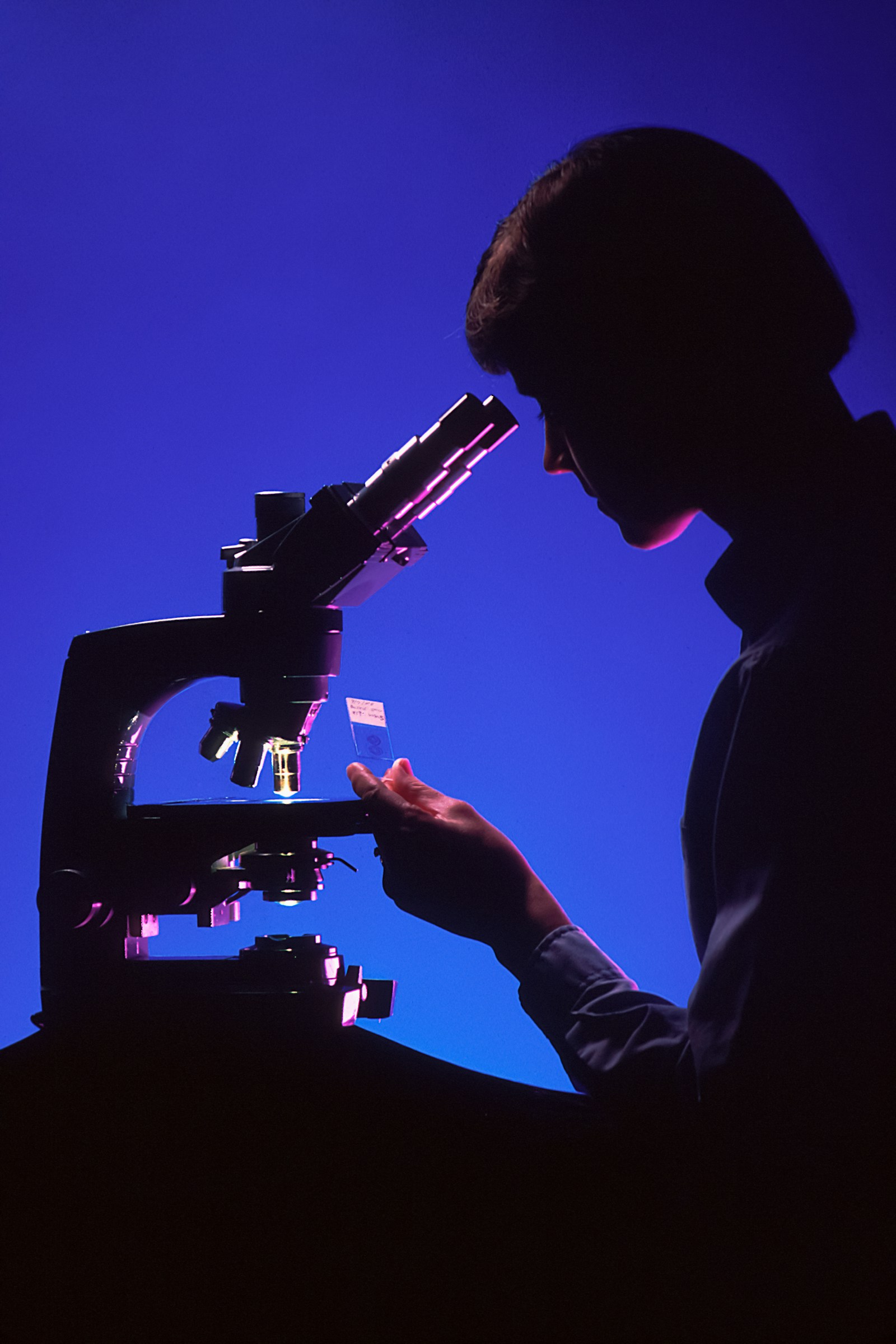
A pathologist examining a slide beside a microscope, lit in blue and magenta.

AI for science. Grounded in biology.

The data foundation
for biomedical AI.

We’re building the data layer that makes it easier to train and evaluate AI models with biological and clinical data.

For research partners
specimen · H&E slide
objective · 40x
Photography: National Cancer Institute / Unsplash, opens in a new tab

Starting in oncology

Linked evidence. A defined model task.

See the data layer

01 / For model teams

Biological evidence.
Usable model inputs.

Data matched to your question, connected to its context, and prepared for approved use.
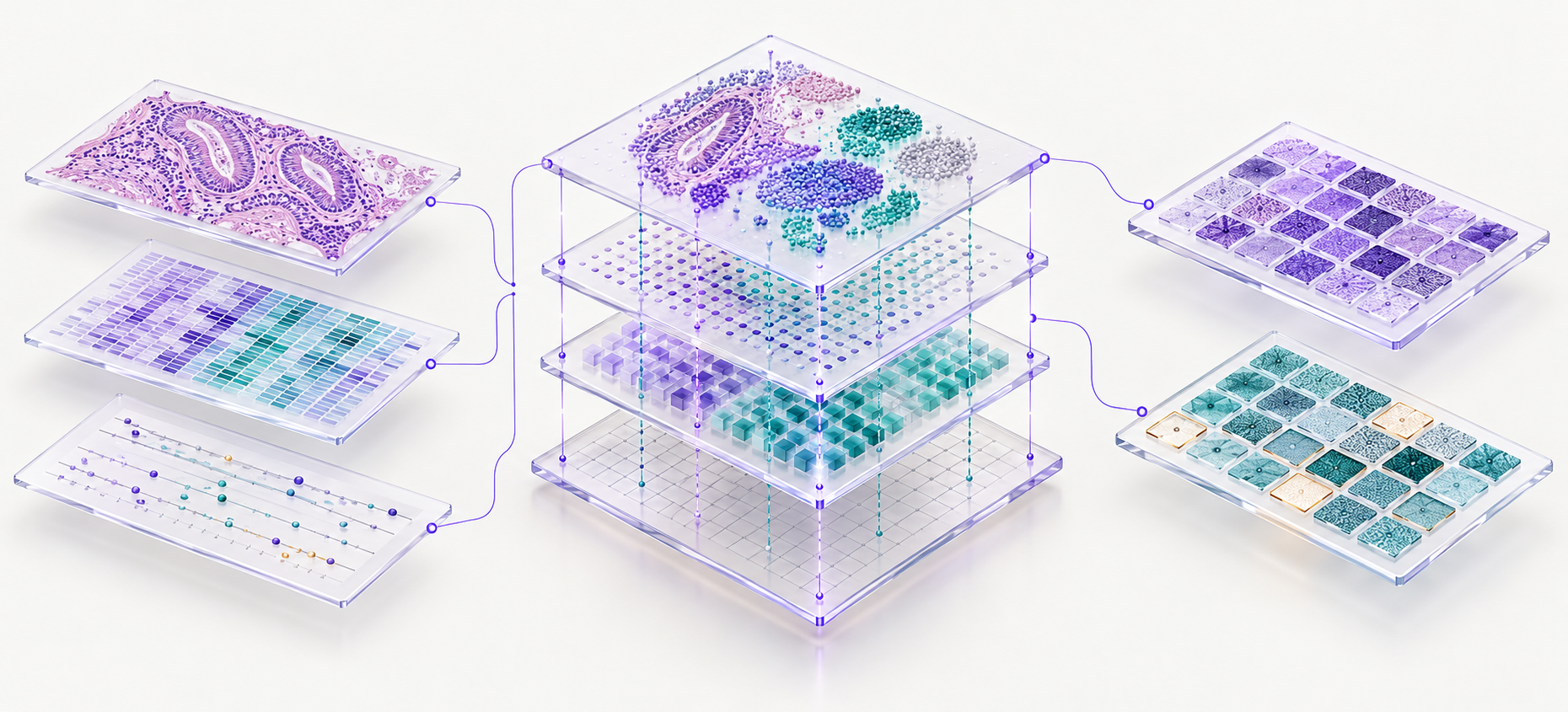
The data layer we’re building
Concept illustration: histology, molecular measurements and clinical events connect through aligned translucent data layers to two separate model-data collections.
  1. 01

    Biological evidence

    Histology, molecular data & clinical outcomes

  2. 02

    The Data Layer

    Connected context. Documented quality.

  3. 03

    Ready for your model task

    Train & fine-tune / Evaluate

Concept illustration. Data availability, linkage and permitted use are assessed for each project.

Begin with one oncology task and the data it needs.

02 / For research partners

More use from
your research data.

Less repeated preparation. More useful collections for internal research and approved collaboration.
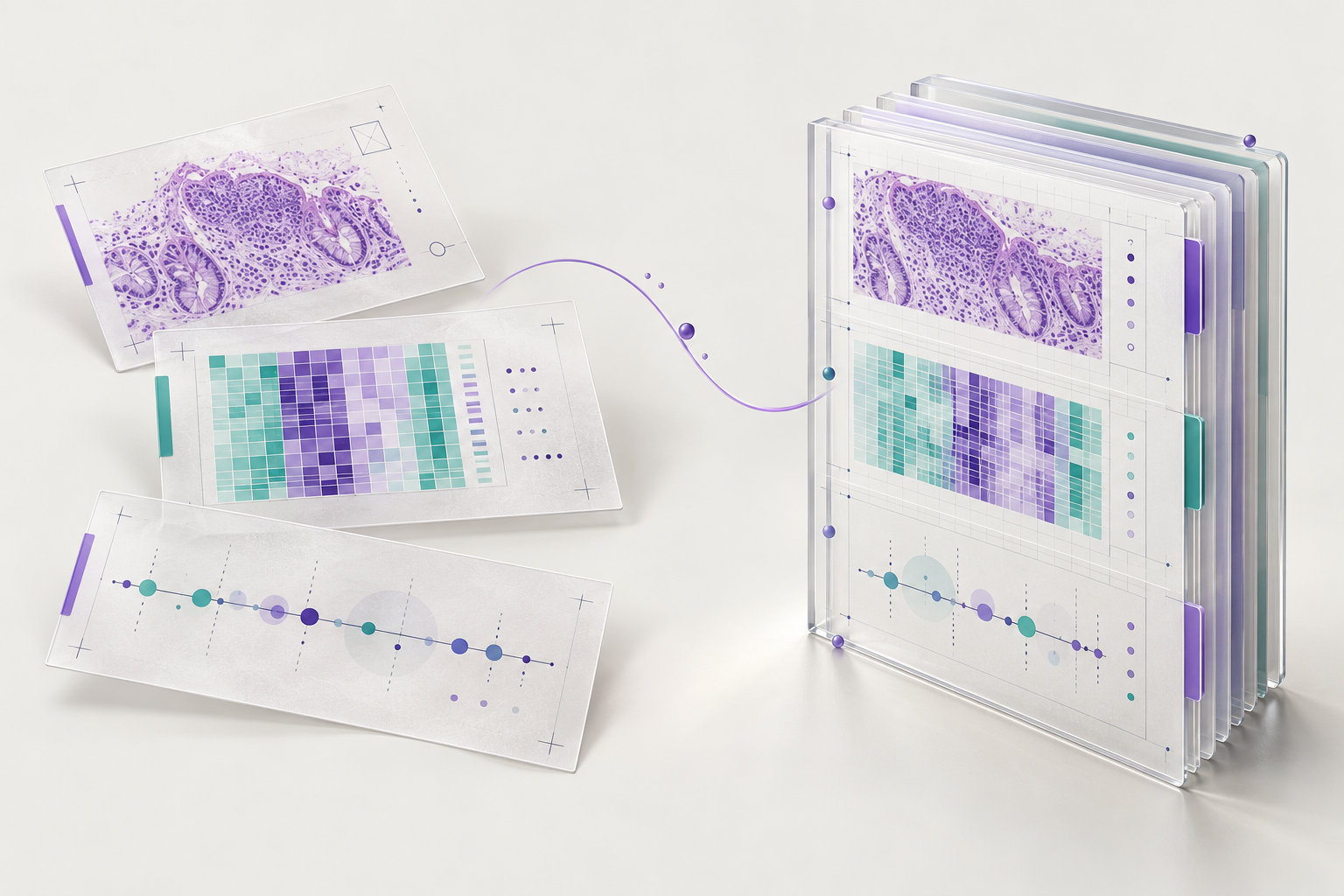
Concept illustration: separate tissue, molecular and clinical data sheets become one organized research collection with its context preserved.
Your collectionReusable research data
One collection. One useful preparation task.
External use requires separate approval.

03 / Our vision

Help make biology
more predictable.

Our ambition: help AI learn from biological evidence and accelerate effective treatment discovery.
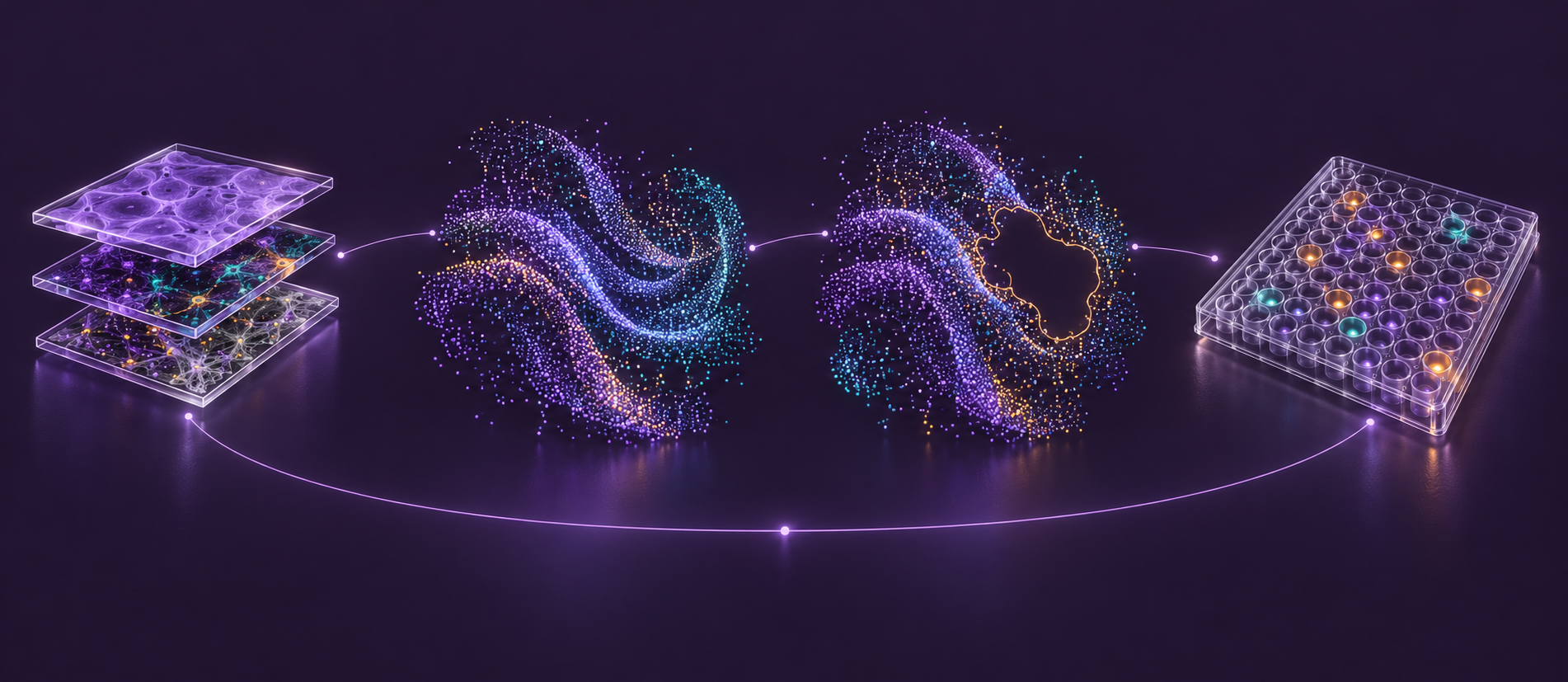
Conceptual research cycle: linked biological evidence informs models, model analysis reveals evidence gaps, and targeted new measurements inform the next cycle.
  1. 01

    Prepare
    evidence

  2. 02

    Train &
    evaluate

  3. 03

    Identify
    evidence gaps

  4. 04

    Guide new
    measurements

Our team

Biology meets AI.

We are a group of PhD researchers in biology and AI in healthcare and biomedicine, and ML/AI engineers, from Mila, McGill University and University of Montreal.

Discovery and product design. Working toward a first scoped pilot.
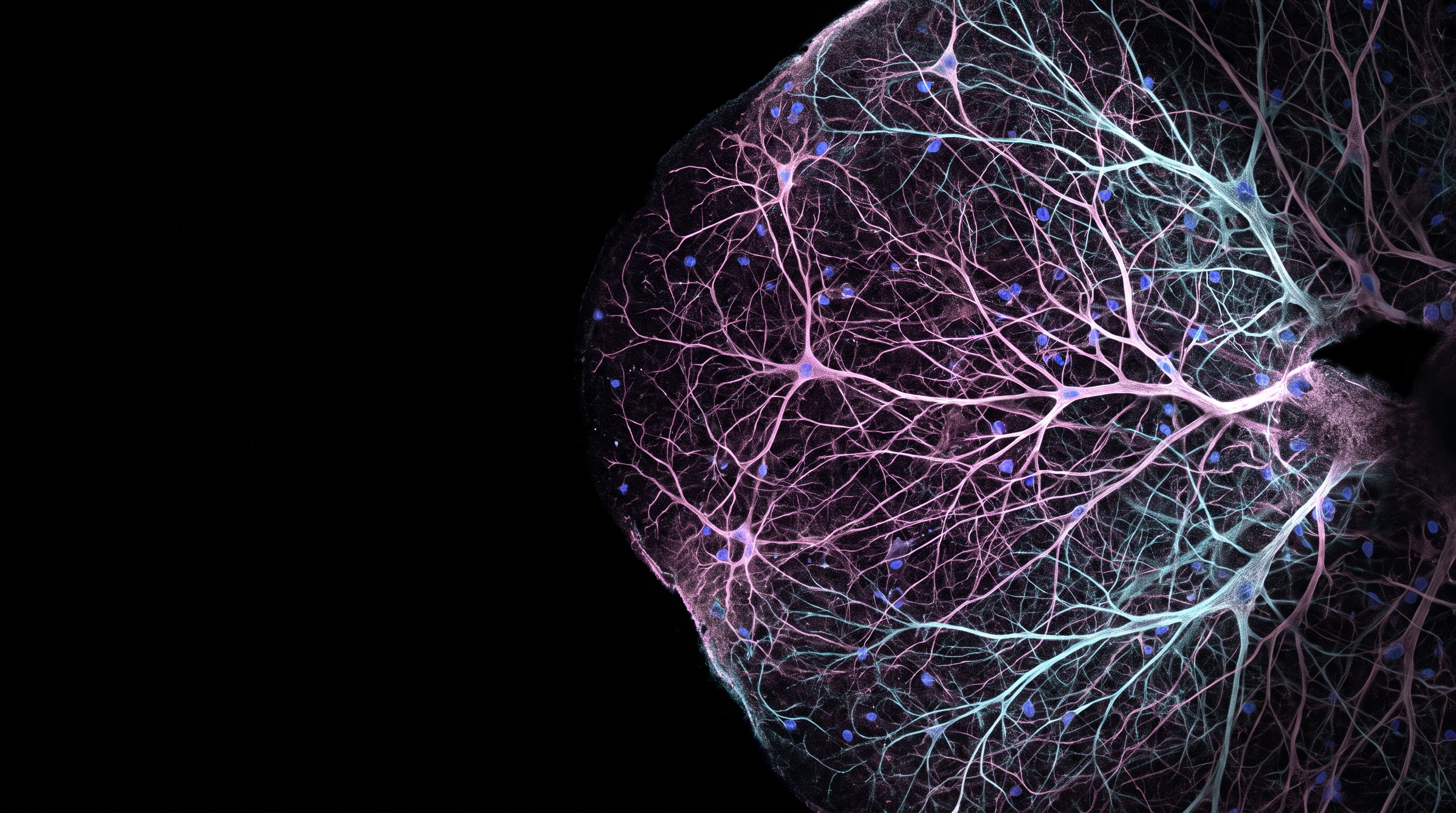
Image source to confirm

Let’s start with your question

What does your model
need to learn?

For model teams

Discuss a data project.

Start with the model task and the evidence you need.

Please keep patient information and research records out of this form.

Prepare an inquiry to copy and share with your Data Layer contact. Nothing is sent or stored by this form.

Inquiry privacy

Your inquiry stays with you.

This inquiry form has no submission backend or browser storage. Form text remains in the page until you clear it or leave. Closing the inquiry panel clears its fields.

Choosing “Copy inquiry” copies the text to your device’s clipboard. It does not send the inquiry. Image-credit links open the credited source in a new tab.

Illustrative science

The data foundation

Histology, molecular measurements and clinical events connect through aligned data layers to separate collections for training and evaluation.

Concept illustration, with synthetic biological imagery. Scroll sideways to inspect the detail on a small screen.